

Click here to view the programme.
Click here to register for online attendance via Teams.
Click here to register for in-person attendance at the NIKI, located at Viale Evangelista Torricelli 5 in Florence.
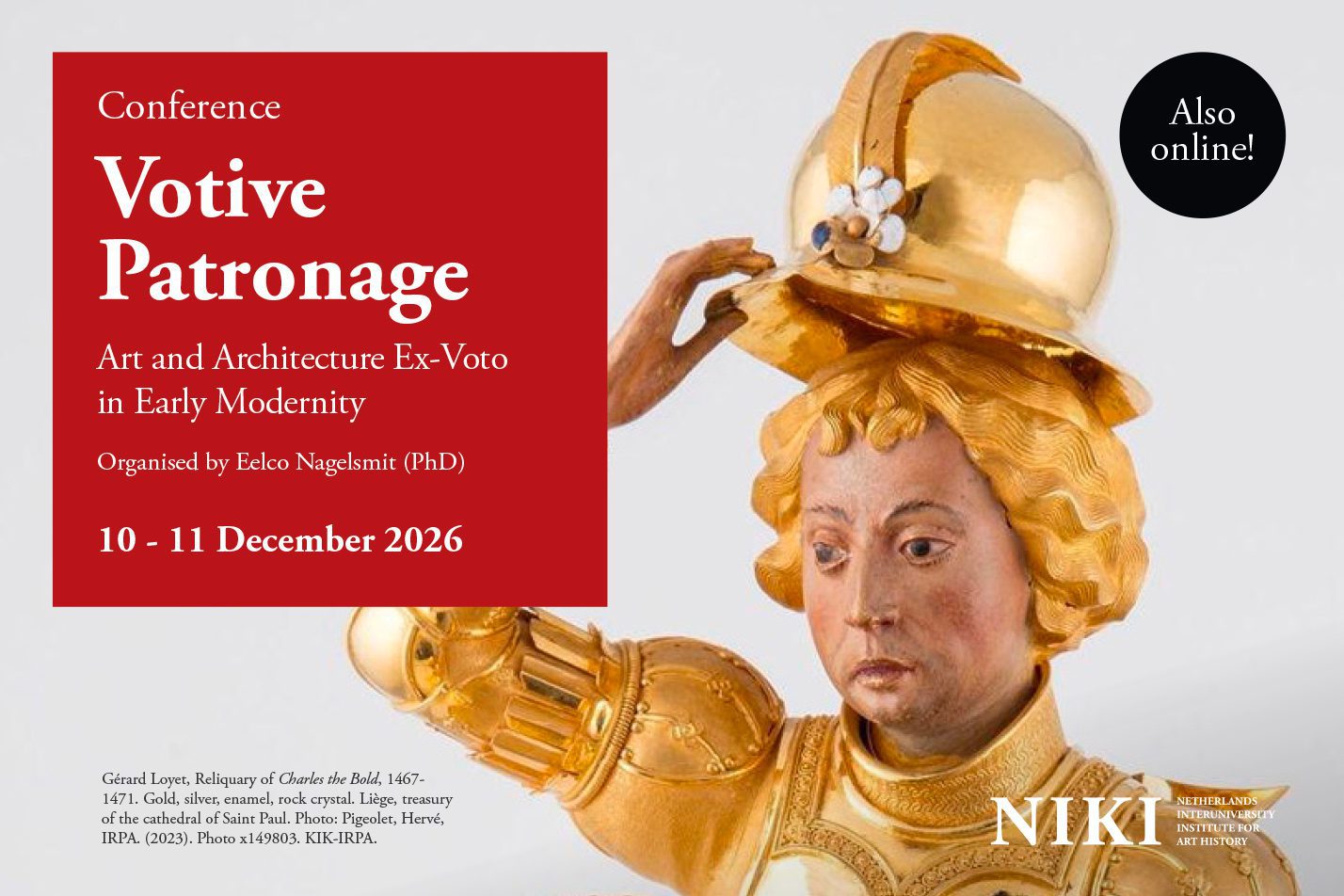
This symposium reexamines the patronage of art and architecture within early modern votive culture (c. 1400–1800), clarifying how such works expressed and fulfilled vows. It proceeds from the premise that votive donations offer a distinctive lens onto early modern subjectivity, blurring boundaries between personal and communal devotion, piety and contract, art and ritual. The votive category was never static, spanning individual ex-voto paintings and figurines, interior ensembles like altar retables, micro-architectural silverwork, textile art, urban monuments such as plague columns, pilgrimage shrines and votive churches, and ephemera like liturgies, plays, and votive masses. In these works, artistic form carried performative power binding human and divine actors. Drawing on recent scholarship in art history, the anthropology of art and religion, and visual and material culture studies, the symposium explores how commissioning, crafting, and displaying votive art and architecture shaped perceptions of divine agency and human intention, focusing especially on the circumstances of vows and their fulfillment across varied religious, social, and political contexts.
The complexity of votive patronage raises questions for historians. What sources illuminate the sequence of events, the content of vows, and the nature of commissions? How do formal or iconographic qualities relate to the vow or underlying predicament? Votives materialize a wish or thanksgiving, redeeming a vow made in peril or fulfilling a desire or atonement. Yet it is often unclear whether they were propitiatory offerings or debts repaid to the divine. This ambivalent, suspended temporal structure, in which a “votive contract” or “votive scenario” unfolds, lies at the heart of these unresolved questions. The Maussian model of reciprocal gift-exchange has also been questioned as a suitable frame for the vertical relationship between votaries and the divine. Whether through ascetic practice, pilgrimage, or donating objects sized to match the vow (e.g. the dimensions of a healed body part), votaries effectively “offered themselves”: a logic at once magical and economic, raising questions about patronage, design, execution, display, and reception.